
Early this spring, the farm worker movement across the country was shaken by reports of abuse connected to a historic figure within the movement and the experiences shared publicly by survivors. For many within and beyond the movement, the news brought grief, anger, disappointment, and renewed reflection on the realities of gender-based violence both within society and within movements working toward justice.
In response, NFWM released a public statement reaffirming our commitment to supporting survivors, addressing gender-based violence within the farm worker movement, and continuing to advocate for dignity, accountability, healing, and justice within our communities. We also reaffirmed something that has long guided our work: movements grow stronger when communities are willing to listen honestly, confront harm directly, and continue centering the voices and well-being of those most impacted.
For farm worker women, conversations around abuse, harassment, exploitation, unsafe conditions, and vulnerability are unfortunately not new. In 2018, NFWM publicly addressed the widespread gender-based violence experienced by farm worker women and affirmed our outrage at the abuse, intimidation, harassment, and assault workers continue to face in the fields and beyond.
The timing of these conversations coincided with several important seasons of reflection and action: International Women’s Month in March, National Farmworker Awareness Week, Sexual Assault Awareness Month in April, and Mother’s Day in May. Together, these moments created opportunities not only to confront hard truths, but also to honor the women whose labor, leadership, caregiving, organizing, and courage continue sustaining farm worker communities and movements for justice across the country.
NFWM at the North Carolina Farm Worker Institute
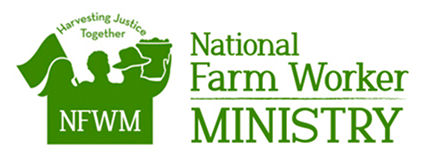
From March 17–19, NFWM’s Director of Farm Worker Advocacy, Elizabeth Rodriguez, and Administrative Assistant Isabella Legra attended the North Carolina Farm Worker Institute alongside outreach workers, advocates, and partner organizations committed to supporting farm worker communities.
The gathering created opportunities for learning, collaboration, and conversations about worker well-being, policy changes, and practical outreach strategies. During the institute, Elizabeth presented From Fields to Foundations: Farm Worker Housing Realities, a workshop examining the connection between housing, health, dignity, and quality of life for farm worker families.
Events like these strengthen relationships between organizations while helping advocates better understand the evolving realities that farm worker communities continue to navigate.
National Farmworker Awareness Week & Housing Justice
During National Farmworker Awareness Week, NFWM joined Student Action with Farmworkers (SAF) and partners across the country in honoring the essential contributions of farm workers and raising awareness about the challenges many continue to face.
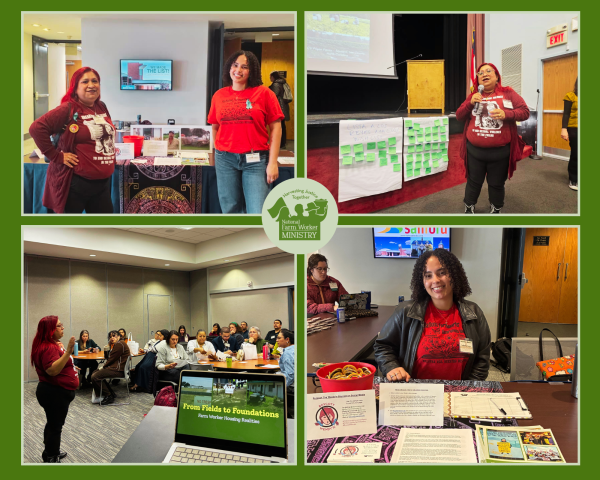
As part of the week, NFWM hosted the second installment in our farm worker housing webinar series: Farm Worker Homes: Turning Advocacy into Real-World Housing Solutions. Together with partners from Farmworker Justice and ALAS, the webinar explored how advocacy, policy, and community partnerships are helping expand access to safe and dignified housing for farm worker families.
The conversation highlighted how housing impacts every aspect of daily life — including physical health, safety, family well-being, and long-term stability. For many farm worker families, women often carry much of the emotional and practical responsibility of caring for households while navigating overcrowded housing, unsafe conditions, economic instability, and limited protections.
The full webinar replay remains available for those interested in learning more about the realities farm worker families face, and the work communities are doing to create change.
Listening to Farm Worker Women’s Experiences
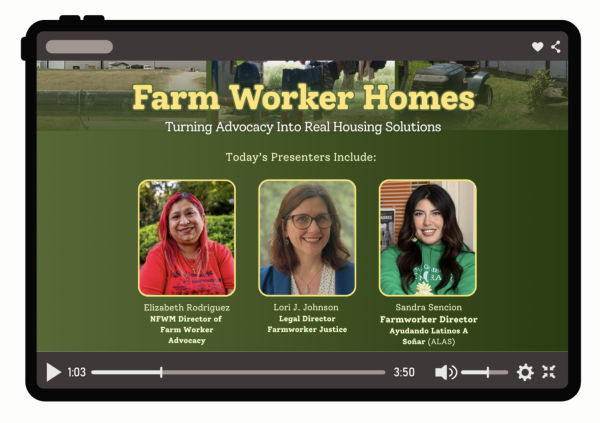
On March 30, NFWM’s Director of Farm Worker Advocacy, Elizabeth Rodriguez, participated in a two-day listening session hosted by American University in partnership with Alianza Nacional de Campesinas and Líderes Campesinas. The gathering brought together advocates, researchers, and farm worker leaders to discuss how current policies continue to shape workers’ lives and well-being.
Throughout the session, farm worker women shared testimony about unsafe working conditions, lack of adequate protections, discrimination, retaliation, exposure to harmful chemicals, and the ongoing vulnerability many immigrant workers experience under current immigration systems.
For NFWM, spaces like these are an important reminder that advocacy begins with listening well, learning from impacted communities, and ensuring farm worker voices remain centered in conversations about labor, housing, health, immigration, and justice.
Farm Worker Voices at the 2026 Eco Institute Food Summit
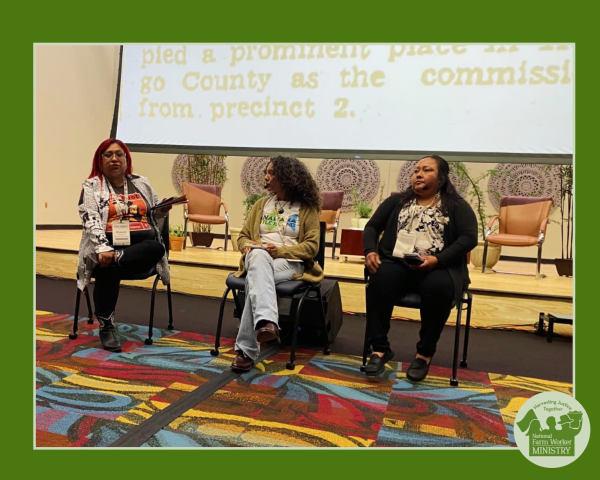
In April, NFWM joined conversations around food systems, labor, sustainability, and agriculture at the 3rd Annual Food Summit in Edinburg, Texas, hosted by the Institute for Ecology Scholarship and Health in partnership with the Center for Sustainable Agriculture and Rural Advancement.
Elizabeth Rodriguez helped coordinate and facilitate a panel titled Farm Worker Rights: The Role of the Farm Worker in the Food System, helping center the experiences and leadership of farm workers and small farmers whose labor sustains communities across the country.
The summit brought together farmers, ranchers, growers, advocates, educators, and community leaders working to strengthen local food systems and partnerships throughout the region.
May Day Actions Across the Country
This spirit of solidarity continued into May Day, as NFWM members, partners, and allies joined workers and immigrant communities across the country in actions calling for dignity, labor protections, and immigrant justice.
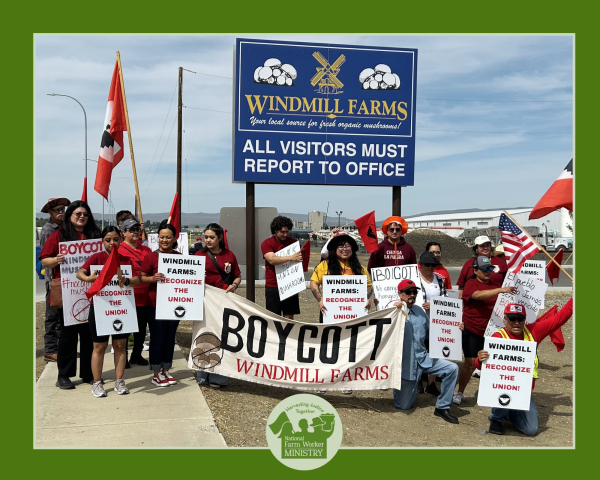
In Salem, Oregon, Rev. Connie Yost, NFWM Board Member and President of Farm Worker Ministry Northwest, joined thousands at a May Day rally with PCUN. In Sunnyside, Washington, longtime NFWM supporters Roger and Marilyn Yockey stood alongside mushroom workers and United Farm Workers members during local actions.

Meanwhile in Texas, Elizabeth Rodriguez participated in a May Day Solidarity Fest supporting the Boycott Wendy’s Campaign before joining LUPE’s La Marcha del Pueblo, where hundreds marched in support of immigrant and worker rights.

Together, these gatherings served as a reminder that farm worker justice remains deeply connected to broader movements for labor rights, immigrant justice, racial equity, and community dignity.
Carrying Solidarity into Summer
As spring moves into summer, NFWM continues to invite supporters and faith communities to stand alongside workers whose labor often remains unseen.
This Mother’s Day season, we highlighted the experiences of plant nursery workers through WeCount!’s Planting Justice Campaign. Many nursery workers in Florida — most of them immigrants, and many of them mothers — help grow the flowers and houseplants sold across the United States while continuing to face unsafe heat, pesticide exposure, wage theft, discrimination, and retaliation for speaking up.
Our partners at WeCount! are calling for stronger protections and accountability in the houseplant industry. We invite you to continue this season of solidarity by learning more, sharing the campaign, and adding your name to the Planting Justice pledge in support of nursery workers and their families.
Across every workshop, listening session, rally, webinar, and public action this spring, one truth continued to emerge: farm worker communities deserve dignity, safety, visibility, and justice — and the movement continues because people keep showing up together.


