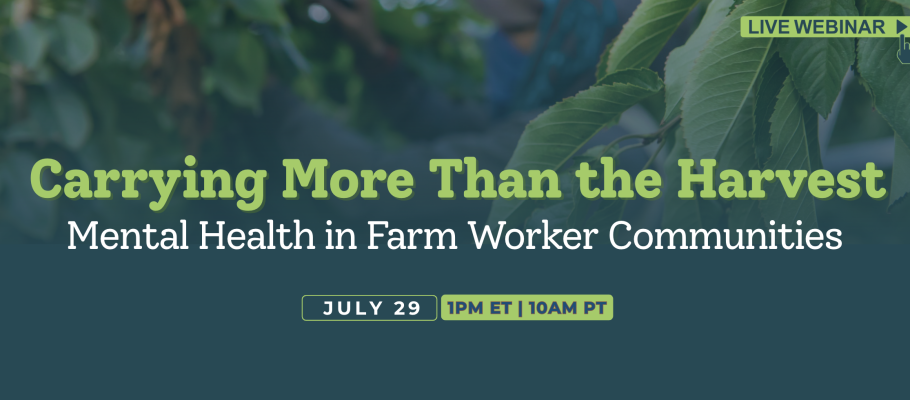
Farm workers carry more than the physical demands of feeding our nation. They also navigate long hours, isolation, financial stress, language barriers, immigration concerns, and other conditions that can significantly affect mental health and overall well-being.
In recognition of BIPOC Mental Health Awareness Month, the National Farm Worker Ministry convened mental health practitioners, faith leaders, and advocates to explore the challenges facing farm worker communities and the community-centered approaches helping improve access to care and support.

About the Conversation
This discussion examined how working conditions, community relationships, and access to culturally responsive care all shape mental health outcomes for farm worker communities.
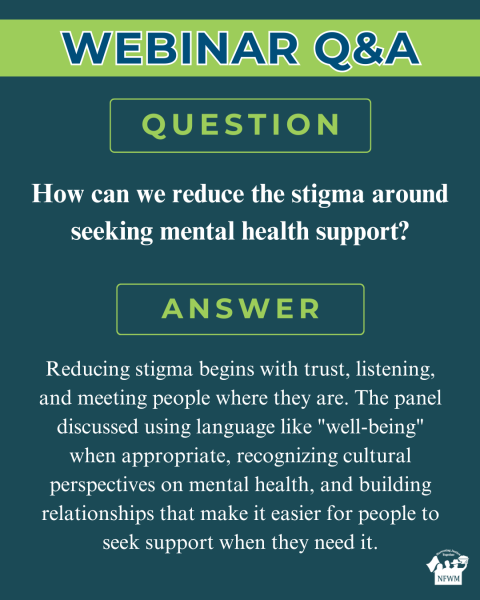
Panelists reflected on the importance of reducing stigma, building trust, strengthening community partnerships, and recognizing that supporting mental health means caring for the whole person. Together, we learned practical ways clinicians, faith communities, advocates, and neighbors can help create healthier futures alongside the people who feed us.
Host & Featured Speakers
- Kathleen Wood
Executive Director, National Farm Worker Ministry - Elizabeth Rodriguez
Director of Farm Worker Advocacy, National Farm Worker Ministry - Dr. Pamela Secada-Sayles, EdD, MPH
Senior Program Manager, Mental Health & Well-Being, Migrant Clinicians Network - Jessica Calderon Gomez
Program Coordinator, Mental Health & Well-Being, Migrant Clinicians Network - Alisson Herrarte
Administrative Minister, Episcopal Farm Worker Ministry - Rev. Frederick Clarkson
Executive Convener, Episcopal Farm Worker Ministry
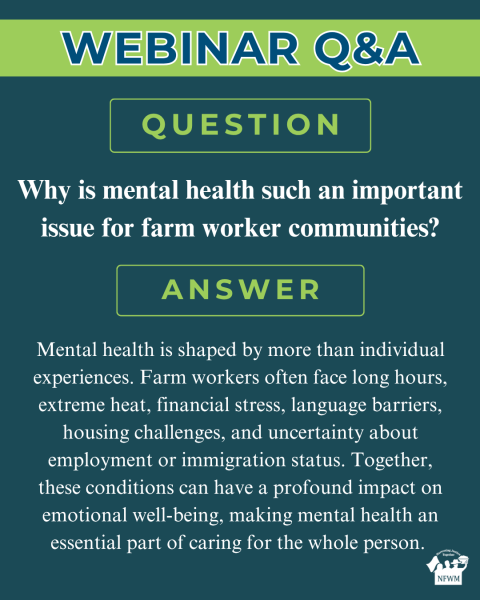
Key Questions from the Conversation


Presentation Slides from Our Presenters
Continue learning by exploring the presentation materials shared during the webinar.
- Migrant Clinicians Network (Dr. Pamela Secada-Sayles & Jessica Calderon Gomez)
- Episcopal Farmworker Ministry (Alisson Herrarte & Rev. Frederick Clark)
These presentations provide information on community-centered care, mental health and well-being, and ways organizations can support
farm worker communities.
Learn More & Take Action
Mental health is deeply connected to working conditions, community support, and access to care. Explore the resources below to continue learning about the issues discussed during this conversation and ways you can stand alongside farm worker communities.
- Mental Health & Well-Being in Farm Worker Communities
Learn how working conditions and access to care shape farm worker mental health and well-being. - Heat Stress and Farm Worker Health
Explore how extreme heat affects farm workers and the fight for meaningful heat protections. - The Impact of Substandard Housing on Farm Worker Health
Learn how unsafe and unstable housing conditions contribute to long-term health challenges. - Pesticide Exposure in Farm Worker Communities
Understand the health risks tied to chemical exposure and ongoing efforts to strengthen protections.


