We join farm workers, organizers, faith communities, and advocates across the country in mourning the passing of Dolores Huerta, whose extraordinary life and leadership helped shape the farm worker movement and generations of people organizing for justice.

As a co-founder of the United Farm Workers, Dolores was a visionary organizer, strategist, and political leader whose work helped secure historic protections for agricultural workers and advance movements for women’s rights, immigrant justice, and civic participation. She understood that lasting change required more than individual courage. It required building relationships, developing leaders, and organizing people to exercise their collective power.
For us at the National Farm Worker Ministry, Dolores was more than a historic figure. She was a longtime partner in the struggle for farm worker justice, a teacher to generations of advocates, and a familiar presence within our community. Many who served in the Ministry learned from her, organized alongside her, and carried forward the lessons of her leadership.
Her legacy is inseparable from the farm workers, women organizers, faith communities, and generations of movement builders who stood alongside her throughout decades of organizing. Together, they helped transform what was possible for agricultural workers and their families.
A Legacy Built Together
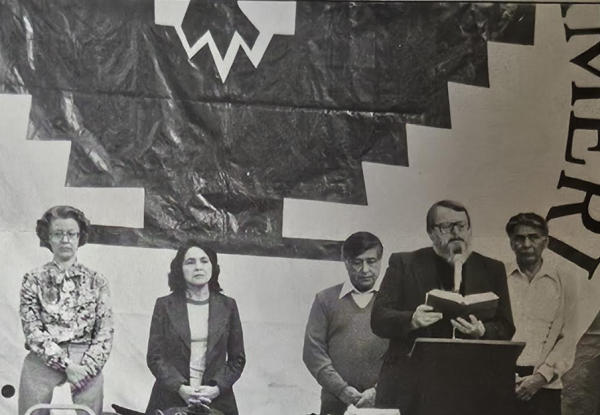
Our relationship with Dolores stretches across decades of organizing, shared struggle, and solidarity.
Former Board Member Sister Marie “Tess” Browne, who stood alongside Dolores during organizing efforts decades earlier, remembered her “courage, vision, tenacity, determination, joy, and unwavering belief in the power of farmworker and women organizing.”
Father Hector offered his remembrance in Spanish:
“Una mujer valiente, sumamente entregada, y líder sin par.”
A courageous woman, deeply dedicated, and a leader without equal.
Our Director of Farm Worker Advocacy, Elizabeth Rodriguez, shared:
“Dolores Huerta will forever live on in our hearts. Her powerful legacy of standing up against injustice and inequality will echo the streets. ¡Sí se puede! She gave us the most powerful gift ever, the power to organize our communities and do work that matters.”
These reflections speak to a legacy that extends beyond any one leader. Dolores helped build collective power alongside farm workers and organizers whose courage, persistence, and leadership continue shaping the movement today.
The Power of People Working Together
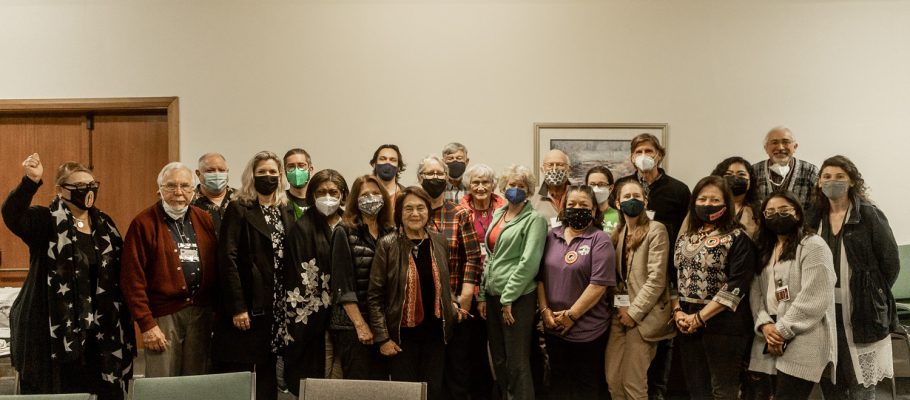
In January 2022, Dolores joined our Board gathering in Bakersfield, California, where she spoke with members about the history of the farm worker movement and the importance of organizing.
In one recorded conversation, she recalled the years of groundwork that preceded the Delano grape strike, including the house meetings and organizing committees that helped farm workers prepare to act together. She also spoke about the decision to stand alongside Filipino farm workers who had already gone on strike, recognizing that solidarity required responding to the struggle unfolding around them.
That history reflected a principle Dolores carried throughout her life: organizing begins with relationships, and collective power grows when people stand together.
During the same gathering, Dolores led those present in a call and response:
“Who’s got the power?”
“We’ve got the power!”
“What kind of power?”
“People power!”
She challenged those gathered to continue the work of the Migrant Ministry, standing alongside farm workers, their families, and others experiencing injustice.
NFWM Board Member Sam Trickey, who first met Dolores in the early 1970s, recalled another moment from a later gathering, in 2022. After speaking with a group of farm worker advocates and NFWM Board Members —answering questions—someone asked why, after so many years of organizing under difficult circumstances, she continued doing the work.
Her response came without hesitation:
“Because there’s work to be done!”
Reflecting on her passing, Sam shared:
“She did the work. Plain and simple, unrelenting, unwavering. She did the work. And this evening there is a huge empty space for many of us. But now more than ever, we must do the work.”
For those gathered, her words were more than encouragement. They were a reminder that the responsibility to continue organizing belongs to all of us.
Continuing the Work
Dolores’s leadership helped shape not only the farm worker movement, but also our understanding of what solidarity requires from people of faith. She called on faith communities to move beyond expressions of support and join the work of organizing for justice.
As our Executive Director, Kathleen Wood, reflects:
“We are grateful to have been formed by Dolores’s leadership. She reminded us that people of faith have a responsibility to join movements organizing for justice, and that our role is to strengthen the leadership and collective power of farm workers.”
We extend our deepest condolences to Dolores’s family, friends, colleagues, and the countless people whose lives were shaped by her leadership and friendship.
We remember Dolores with profound gratitude for her strategic vision, political leadership, and the generations of people she helped organize. We are especially grateful for the ways her leadership helped form our Ministry and strengthen our commitment to farm worker justice.
Today, we honor that legacy by continuing to stand alongside farm worker-led organizing, supporting the development of new leaders, and holding policymakers and institutions accountable to the people whose labor sustains our communities.
As Dolores shared with us at our January 2022 Board Meeting,
There is still work to be done…
We invite you to continue that work with us, standing alongside farm workers and the communities organizing for justice.


