California Governor Brown Vetoes Farm Worker Bill
By Virginia Nesmith, June 29, 2011 National Farm Worker Ministry staff member Lucy Boutte was present with the United Farm Workers for the last 12 days in Sacramento, helping to organize prayer vigils, marches and fasts in hopes of persuading California Governor Jerry Brown to sign SB 104, the Fair Treatment for Farm Workers Act. [...]
Groundbreaking Report on U.S. Farm Labor Released
Bon Appetit Management Company Foundation and United Farm Workers Release Groundbreaking Report on U.S. Farm Labor
PALO ALTO, Calif., March 31, 2011 /PRNewswire
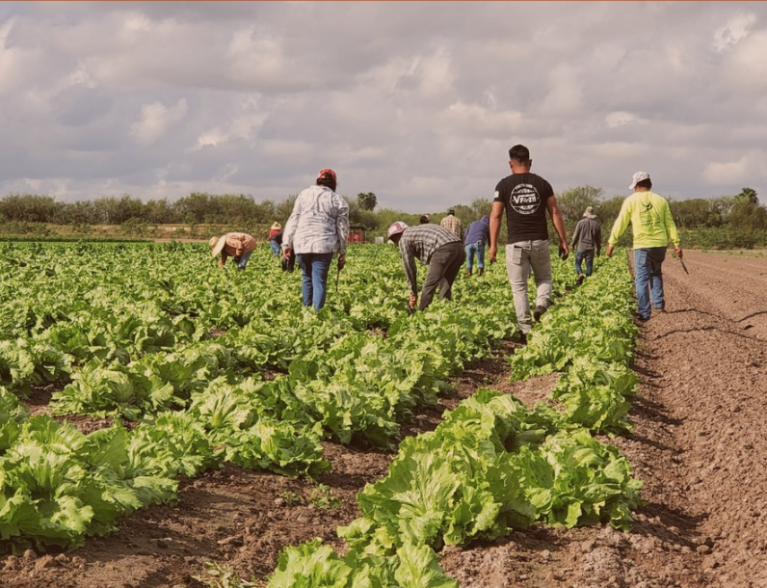
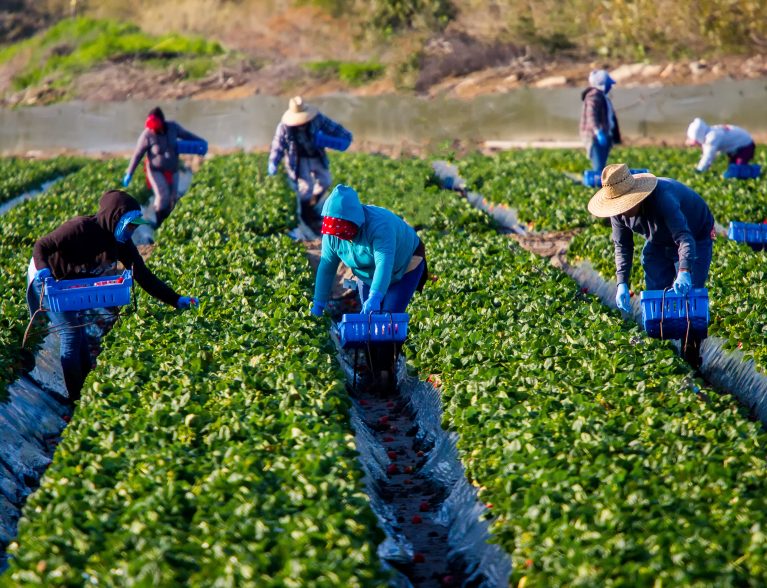
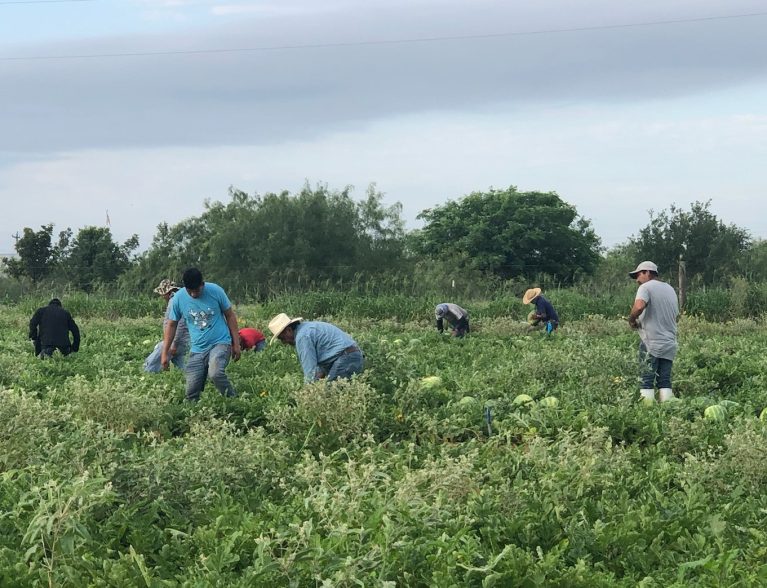
More and more Americans are asking questions about where their food comes from, but few are going so far as to think about who picked it. Farmworkers remain in the shadows. A groundbreaking new report released today, Cesar Chavez Day, in honor of the labor leader who fought tirelessly for farmworker rights, shines a light into these dark corners of our nation’s food system.
The Inventory of Farmworker Issues and Protections in the United States is the product of a unique for-profit/NGO joint venture of the Bon Appetit Management Company Foundation and United Farm Workers (UFW), with support from Oxfam America. By compiling and analyzing data from multiple federal, state, and private sources, it renders the most comprehensive picture yet of the reality faced by America’s least-valued yet critically important workforce.
Key issues faced by the nation’s 1.4 million crop farmworkers:
• Farmworkers are exempt from most federal wage and hour standards, and even existing regulations are rarely enforced, leading to rampant wage theft and other abuses.
• Children as young as 12 are legally allowed to engage in farm work, although it is one of the most dangerous employment sectors.
• Widespread use of subcontractors leads to lack of transparency and difficulty enforcing existing laws.
• Health and safety standards are inadequate, and even those that exist are rarely enforced.
• Most farmworkers are ineligible for unemployment insurance and workers’ compensation insurance that is granted to employees in other sectors.
• Farmworkers are explicitly excluded from laws that protect collective bargaining and free association.
In summary, the U.S. food supply depends on the labor of a socially and economically marginalized population working in often appalling, sometimes abusive conditions.
The executive summary and full report, along with high-resolution photos of farmworkers, can be downloaded from http://bamco.com/page/114/farmworker-inventory.htm.
NFWM Joins Courthouse Vigil Seeking Justice for Maria Isavel
NFWM staffers Lucy Boutte and Margarita Mota, along with other NFWM supporters from the Los Angeles area, traveled to Stockton, CA to join hundreds of farm worker supporters and the UFW for a two day vigil calling for justice in the 2008 heat death of pregnant 17-year old farm worker Maria Isavel Vasquez Jimenez. The [...]
NFWM Heads to Washington DC!
As a huge snowstorm moved across the east coast, National Farm Worker Ministry staff and board members gathered in Washington DC. For three days at the end of January we reflected on the history of the farmworker movement and NFWM, set out a vision for the coming year, and visited the hall’s of our nation’s capital to push lawmakers on farmworker rights.
On Friday we met with a variety of leaders from both the NGO-world and the Obama Administration at the United Methodist Building on Capitol Hill. After walking through the cold and snowy (but beautiful) downtown Washington DC we were excited to see the sign in front of the UMB reading “Have you eaten today? Thank a farmworker!” Later on in the day Congressional staffers mentioned to a board member that the sign received a good deal of attention.
Interfaith Thanksgiving Prayer Service and a Call to Action
The newly formed Interfaith Advisory Committee presented a beautiful prayer service remembering farm workers and the struggle they still suffer in the fields. Two days before Thanksgiving, NFWM-California gathered at St. Anne’s Shrine in Santa Monica. Fr. Arturo, Pastor at St. Anne’s set the tone; he had fruit hanging from trees leading to the altar for the service. St. Anne’s eight grade students participated in the service, processing between the fruit filled trees. A group of them picked the fruit, placed it in baskets and brought the baskets to the altar. The service was led by Msgr. John Moretta, Pastor, Resurrection Church, LA.
Rabbi Steven Jacob, passionately addressed the congregation: “Recently somebody said something that is so horrible, so terrible, that even you as young people would react to it. Somebody actually said, ‘Stupid Indians, Indians are of no use, of no use, Indians don’t understand anything or can’t do anything’. The worst, the worst hatred against any other person. And these are the kinds of insults from supervisors, made to indigenous workers at Giumarra Vineyards. And this morning, nationwide on NPR they exposed what’s happening to women, particularly in the fields.” People in America, across this land, the week of Thanksgiving are aware of the bitterness and hatred that exists towards farm workers.
Time to Stop Human Trafficking, by Dr. Sam Trickey
The following Op-Ed was published January 10, 2011 in gainesville.com, the on-line version of the Gainesville Sun. The author, Dr. Sam Trickey, is a member and Past President of the Board of Directors of the National Farm Worker Ministry.
Sam Trickey: Time to stop human trafficking
January 11th is worldwide Human Trafficking Awareness Day. According to the State Department’s 2010 Trafficking in Persons report, “the majority of modern slaves (are) in agriculture and mining around the world.”
It happens here. Last July, the U.S. Department of Justice indicted 3 people for holding over 50 farm workers in northern Alachua County. The Haitianrs were brought in on H-2A agricultural guestworker visas, promised three years work, and good pay. Upon arrival, their employers confiscated their passports and visas.
The indictment says the workers were “denied necessary medical care” and suffered “chronic hunger, weight loss, illness and fatigue.” If workers complained about the conditions they were threatened with deportation. One of the females reported being raped.
Sadly, this is just one of many disgraces in Florida’s fields. Since 1997, federal officials have produced seven Florida farm worker slavery convictions. Over 1,100 farmworkers have been liberated from slavery in Florida’s fields. A major bust in East Palatka in June, 2005, led to convictions.
NFWM Joins 130 Actions at Chase Banks on December 10, 2010
On Human Rights Day 2010, December 10th, NFWM and YAYA organized 15 actions at JP Morgan Chase Bank locations in California and Florida in support of the Farm Labor Organizing Committee’s (FLOC) campaign to gain justice for tobacco farm workers. NFWM supporters leafleted at bank branches and spoke to branch managers, asking them to let the corporate office know that we were there.
These actions were part of a bigger day of actions organized by the Coalition Against Bank Greed and Exploitation. Actions were held at nearly 130 Chase Bank locations in 22 states.
CIW Wins Major Victory for Social Responsibility in Florida Tomato Fields
NFWM congratulates the Coalition of Immokalee Workers (CIW) for the landmark agreements they won this month for farm workers in the Florida tomato fields. CIW announced the first formal agreement with a tomato grower, Pacific Tomato Growers, on Oct. 14; and announced a similar agreement a week later with Florida’s largest tomato grower, Six L’s.

NFWM staff, board and supporters around the country, and especially NFWM-Florida and NFWM-YAYA, have been actively working with the CIW on its Fair Food Campaign since the campaign began.
From the CIW/Pacific press release:
“Pacific Tomato Growers, one of the country’s oldest and largest tomato producers, and the Coalition of Immokalee Workers (CIW), the Florida-based farm worker organization spearheading the Campaign for Fair Food, have signed an innovative agreement that sets new standards for social responsibility and accountability in Florida’s tomato industry.
The agreement represents a significant step forward in the CIW’s decade-long campaign for labor reforms in Florida’s tomato industry. Not only is it the first formal agreement between the CIW and a major tomato grower, but the new accord establishes several practical systems designed to implement cooperatively the key principles of the Code of Conduct at the heart of the Campaign for Fair Food. Those principles include a joint — and, when need be, external — complaint resolution system, a participatory health and safety program, and a worker-to-worker education process aimed at insuring that farm workers themselves are active participants in the social responsibility efforts.”
For the entire press release, click HERE.
For more on the victories, click HERE.
Photo: Lucas Benitez, left, of the CIW shakes hands with Jon Esformes of Pacific Tomato Growers following yesterday’s press conference at Pacific’s Immokalee farm. Rev. Russell Meyer, Executive Director of Florida Council of Churches, looks on. Photo by Andrew West, Ft. Myers News-Press.
Evergreen YAYAs sponsor Mason County Literacy ESL Tutor Training
On October 15th and 16th over 20 Evergreen YAYAs, students, and community members attended a ten hour volunteer training to learn how to tutor adult immigrant learners in English. Friday night was spent learning about the work of Mason County Literacy, a non-profit, largely volunteer run organization that has been in operation for nearly 20 years. MCL and Thurston County Bookends utilize about 150 volunteers to provide free instruction to adults wishing to earn a GED, learn English as a second language, or improve their math and literacy skills. Participants read oral histories prepared by ESL students and talked about the different challenges and strengths that can shape the immigrant experience. We also discussed the different reasons that people emigrate from their home countries and the unique place that many immigrants find themselves in when they come to the United States seeking refuge from persecution and can never return home. A shared experience we found in the oral histories was the sense of loneliness and isolation; finding ordinary acts such as a trip to the grocery store completely intimidating because you cannot communicate with others.
FLOC Launches JPMorgan Chase Divestment Campaign
JPMorgan Chase is one of the lead banks in a consortium of lenders that provides $498 million in credit to Reynolds American, one of the largest tobacco corporations in the country. Reynolds is making billions while farm workers continue to suffer serious human rights abuses in the tobacco fields.
Join FLOC in closing your Chase bank accounts and credit cards and tell Chase to stop investing in exploitation! We are asking people who care about farm worker justice to close their Chase accounts, cancel their Chase credit cards, and pledge not to bank with Chase until Reynolds agrees to work with FLOC to find a solution to these abuses, or until Chase severs its financial ties with Reynolds.
- Make a pledge to close your Chase Bank accounts and/or Chase credit cards until Reynolds agrees to work with FLOC to find a solution to the abuses or until Chase severs financial ties with Reynolds. CLICK HERE to access the pledge form.
- Don’t have a Chase Bank Account? You can still support the Divestment Campaign! Pledge not to bank or use a Chase Credit card!
- Organize a leafleting / bank manager action at your local Chase Bank branch. For the Chase Organizing Toolkit, CLICK HERE.
For More Information: