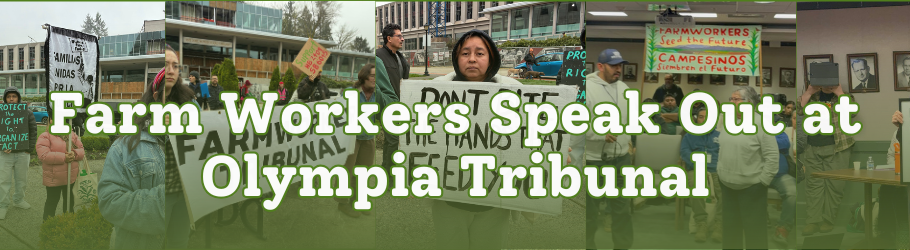
This January, National Farm Worker Ministry’s Farmworker Advocacy Director, Elizabeth Rodriguez, kicked off the year standing in solidarity with farm workers and their communities in Olympia, Washington, attending the 13th Annual Farm Worker Tribunal hosted by Familias Unidas por la Justicia (FUJ).
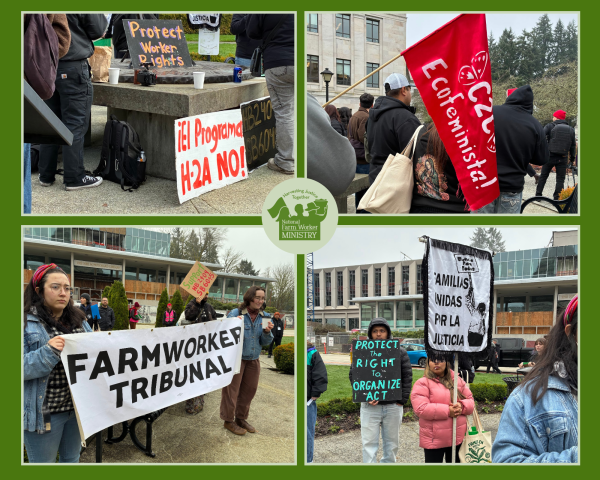
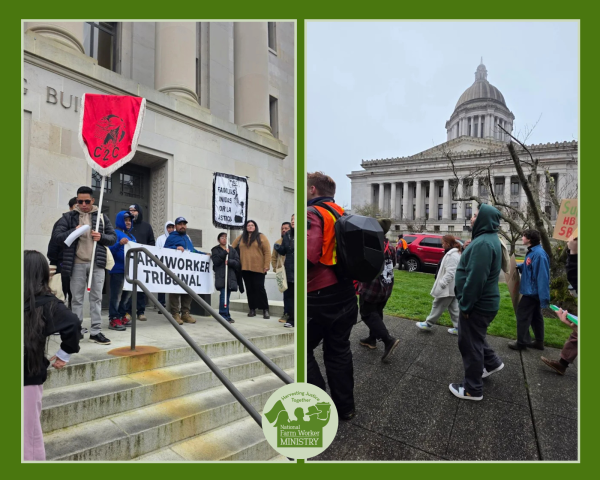
On a cold day in Olympia, the Washington State Capitol was buzzing with activity as farm workers from across the state gathered to make their voices heard. Rodriguez joined farm workers, organizers, and community allies as key legislation — SB 6045 and HB 2409 — came before lawmakers.
For people of faith and conscience, moments like these are a reminder of the important role we play in standing with farm workers as they advocate for justice, dignity, and safe working conditions.
Farm Workers Speak for Themselves
Farm workers and organizers showed up in strong numbers, including members of Familias Unidas por la Justicia, former UFW Windmill Mushroom workers, and allies from Community to Community Development (C2C).
Together, they offered testimony in support of two pieces of legislation being considered by the Washington State Legislature: SB 6045, which would formally recognize farm workers’ right to form unions, and HB 2409, which would grant farm workers the right to collectively bargain with their employers.
For many workers present, these protections represent the ability to speak out about unsafe or unjust working conditions without fear of retaliation. Testimony from workers highlighted the real-life consequences of not having these protections — including exposure to dangerous chemicals, long hours in unsafe environments, and the risk of losing employment when raising concerns.
Although the bills ultimately did not move forward this legislative session, the testimony shared by workers and the strong turnout from farm worker organizations and allies demonstrated the continued momentum behind efforts to secure these rights. The conversations sparked in Olympia are part of an ongoing movement to ensure farm workers are afforded the same protections as other workers across the United States.
A People’s Tribunal
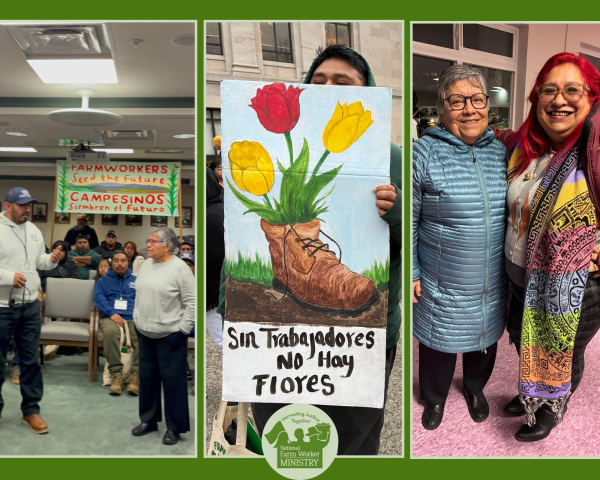
Following the legislative sessions, farm workers convened their own powerful people’s tribunal.
Community members, organizers, and allies gathered to listen as workers shared their experiences openly — speaking about exposure to dangerous agricultural chemicals, unsafe working conditions, and the retaliation many workers face when they report abuses.
These testimonies offered a sobering look at the challenges farm workers continue to face, while also highlighting the courage and resilience of those organizing for change.
At one point during the tribunal, farm worker leader Alfredo “Lelo” Juarez joined the gathering via Facebook Live from Oaxaca, Mexico, sending messages of solidarity and encouragement to those gathered in Olympia. His words energized the room and reminded participants that the movement for farm worker justice extends far beyond state lines.
A Movement Rooted in Solidarity
Farm workers in Washington continue to carry forward the spirit of “Sí Se Puede” — building collective power, challenging unjust systems, and organizing toward dignity and justice.
For NFWM, participating in gatherings like the Olympia tribunal is part of our ongoing commitment to stand alongside farm workers and the organizations leading this work.
By showing up, listening, and supporting farm worker-led efforts, people of faith and conscience help amplify the voices of those whose labor feeds our communities every day.
As NFWM’s Farm Worker Advocacy Director, Elizabeth Rodriguez, reflected after the tribunal:
“Farm workers want to be protected from retaliation. They want to be able to call out poor and unjust working conditions and improve those conditions to ensure a safe working environment for themselves and their colleagues.”
We look forward to returning to Washington later this year and continuing to stand in the gap for farm workers — supporting their efforts through legal engagement, participating in boycotts when workers call for them, and raising our voices for the fair treatment of all workers in the United States.
Because the people who make sure our families are fed day after day deserve dignity, safety, and justice in the workplace.